
"FNC China"
100 article(s) found

Introduction to Colombian Fine Coffee is Colombian coffee good? Characteristics of Colombian Coffee
The Colombian Coffee producers Association (Federacion Nacional de Cafeteos de Clolmbia), known as [FNC] for short in the industry, introduced the two main varieties of Colombian coffee, Kaddura and Colombia. Kaddura, which was introduced from Brazil in the 1960s, now accounts for 45-50% of the country's output and has replaced the earliest Tibica. A new breed with the same name as Colombia [Columby]

Colombia's two main coffee bean varieties Kadura and Colombia coffee bean production regional flavor
Colombia Coffee Producers Association (Federación Nacional de Cafeteos de Clolambia), or industry abbreviation [FNC] staff introduced the two main varieties of Colombian coffee, Cadura and Colombia. Kadura was introduced from Brazil in the 1960s and now accounts for 45-50% of Colombia's production, replacing the earliest Tibica. A new breed of the same name as Colombia [Colombi

A brief introduction to the cup test results of the treatment method of grinding degree and roasting degree of Colombian fine coffee
Large-scale enterprise coffee farming land is distributed in the central and northern parts of China, and it is the main producing area of commercial beans, including the three major producing areas with a long history in the middle, such as Medeine, Amenia and Medillin,Armenia,Manizales, commonly known as [MAM]. It has a strong sour taste and typical Central American flavor. But Bucaramanca in the northeastern province of Santander has a low sour and bitter flavor.

Colombia Fine Coffee Bean with Rich Landforms Origin and Development History and Culture Introduction
Kadura was introduced from Brazil in the 1960s and now accounts for 45-50% of Colombia's production, replacing the earliest Tibica. Colombia, the namesake of Colombia, is a hybrid coffee developed in the 1980s, with a Kadura and Timo lineage, known as the infamous Catim, but the FNC insists that Colombia, although a descendant of Catim, has a much stronger flavor than the average Catim

Introduction of Cooperative processing Plant of Colombian Coffee producers Association
The cooperative processing plant of the Colombian Coffee producers Association introduced a new breed of coffee with the same name as Colombia. [Colombia] is a mixed-race coffee developed in the 1980s, with Kaddura and Timo ancestry, that is, the notorious Kadim, but [FNC] insists that although Colombia is a direct descendant of Kadim, its flavor is far more elegant than that of ordinary Cartim, because Colombia has been with Elaraby for many generations.

Coffee production in China
The vast majority of coffee in China comes from southwestern Yunnan Province and is limited to Arabica, a cross between Arabica and Robusta, called Katim.

Colombia Fine Coffee Flavor Aroma Description
At present, most of Colombia's estates adopt the mixed planting model of 70% Kadura and 30% Colombia. Delicious Tibica has disappeared. Colombia's overall coffee variety allocation, roughly presented Kadura 50%, Colombia 30%, Tibica 20%. Colombia is rich in topography, low in latitude and high in altitude, and has excellent conditions for fine coffee growth. Costa Rica's coffee region lies between three and eight degrees north latitude, which is low

A brief introduction to the description of flavor, taste and aroma characteristics of Colombian boutique coffee beans with rich landforms
The new breed [Colombia], which has the same name as Colombia, is a mixed-race coffee developed in the 1980s, with Kaddura and Timo ancestry, that is, the notorious Katim, but [FNC] insists that although Colombia is a direct line of Katim, its flavor is far more elegant than that of ordinary Kadim, because Colombia has washed away the moldy smell of strong beans after generations of reverse hybridization with Arabica, and the flavor is more like that of Katim.

A brief introduction to the cultivation of Colombian boutique coffee beans with balanced taste, geographical location, climate and altitude
With rich landforms, low latitudes and high elevations, Colombia has excellent conditions for the growth of boutique coffee. The Costa Rican coffee area, located between three and eight degrees north latitude, is a low-latitude coffee belt. It can be harvested twice a year, and ripe coffee can be harvested almost every month from south to north. Large-scale commercialized coffee farmland is distributed in the central and northern parts of China, and is the main producing area of commercial beans, including the central part with a long history.

A brief introduction to the Market Price of Colombian Fine Coffee Bean varieties with High altitude
But Bucaramanca in the northeastern province of Santander is known for its low sour and bitter flavor, similar to Indonesia's Mantenin flavor, probably related to an altitude of only 960m (low altitude, low acidity, always good). Bucamanca's beans are very interesting, unlike the familiar Colombian flavor. Although they belong to soft beans, they are full-bodied and do not taste like [MAM] beans.

A brief introduction to the flavor, taste and aroma characteristics of Colombian boutique coffee beans with low-latitude coffee belt
Cauca province, Cauca department, the name comes from the Cauca River, Cauca River. Located in southwestern Colombia, it is an important producing area of Colombian boutique coffee together with Narino Department and Huila Department. Provincial capital: Popayan Popayan population: about 1368000 location: 00.58.54-03.19.04 north longitude 75.
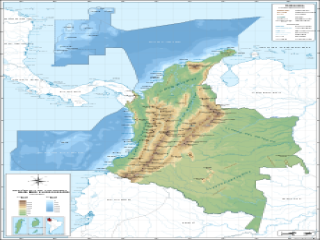
The flavor and taste of coffee beans in Huilan area of Colombia is recommended by Colombian coffee beans with high performance-to-price ratio.
Following Cafe (Wechat official account vdailycom) found that the history of Columbia Coffee, which opened a small shop of its own, dates back to 1808. A priest brought coffee to Colombia for the first time from the French Antilles via Venezuela. The suitable climate in Colombia provides a truth for coffee.
World Coffee producers Forum-Live broadcast that you can't miss!
Following Cafe Review (Wechat official account vdailycom) found that Beautiful Cafe opened a small shop of its own. We can't live without coffee more and more, and we can't do without every coffee grower, of course. The acceleration of industrialization, climate change and market fluctuations have brought a series of problems and challenges to coffee growers. FNC is a professional association that has served coffee farmers for 90 years.

Colombian coffee imprint
Colombia Colombia is the world's largest producer of premium coffee! The traditional deep-roasted coffee has a strong and memorable flavor. In 1808, coffee was first introduced to Colombia, which was brought by a priest from the French Antilles via Venezuela. Today, the country is the second largest producer after Brazil, with an annual output of 13 million bags per bag

A brief introduction to the treatment method of grinding degree and baking degree of Colombian boutique coffee beans with balanced taste
English name: Colombia huila Huilan Coffee Raw Bean Commodity Specification: 1000 grams Coffee country: Colombia handling method: washing Coffee Grade: 18 years of production: 2013 in the Huila,SI trading company recommended that farmers use biological control methods to control diseases and insect pests and maintain the cultivation of the old species of typica, as well as to continue the tradition of cultivation! Because Huila is located in the country

A brief introduction to the planting situation of Colombian boutique coffee beans with mild taste, geographical location, climate and altitude
At present, most of the Colombian manors adopt the mixed mode of 70% Kaddura and 30% Colombia, and the delicious Dibica has disappeared. The overall coffee variety configuration in Colombia is roughly 50% in Kaddura, 30% in Colombia and 20% in Tibica. With rich landforms, low latitudes and high elevations, Colombia has excellent conditions for the growth of boutique coffee. The Costa Rican coffee area lies between three and eight degrees north latitude, belonging to low latitude.

A brief introduction to the History and Culture of the Origin and Development of Colombian Fine Coffee beans at High altitude
When buying Costa Rican beans, don't think that the highest [Supermo] of 17-18 mesh must be delicious. Be sure to check which producing area the beans come from. If the producing area is not specified, it is mostly commercial beans of [MAM], because the southern boutique producing areas will indicate the provinces and place names, so as to distinguish them. Colombian Coffee producers Association (Federacion Nacional de Cafeteos de Clolm

A brief introduction to the treatment method of grinding degree and baking degree of Colombian boutique coffee beans with low-latitude coffee belt
This is a coffee produced by a production combination of two hundred and ninety-six families near Bitlid, south of Huilan County, Colombia. The average cultivated area of producers in Bitlid is 2.5ha and the elevation is 1500 meters above sea level. The soil here is slightly acidic, and the coffee produced will be sweet and refreshing if roasted well; the legendary Colombian traditional washing essence
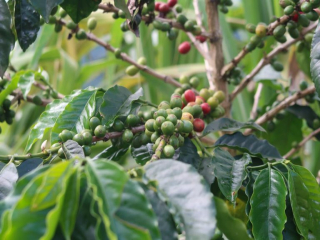
A special description of the flavor and taste of the historical story of Colombian coffee beans in Huilan coffee producing area of Colombia.
Professional coffee knowledge exchange more coffee bean information please follow the coffee workshop (Wechat official account cafe_style) Colombia is the world's largest producer of quality coffee! Colombian coffee was probably introduced by Jesuit monks in the 18th century and did not begin to play an important role until the end of the 19th century.